


The gradient of Jalori Pass trek is moderate, offering great adventure and excitement to trekkers.
The under explored beauty of nature knits the interest of nature lovers and trekking enthusiasts which forces them to wander in the
picturesque surroundings of Jalori Pass Trek.
Jalori Pass Trek, the presence of God
It is one of those treks, which have the rare beautiful trails in the Himalayas with rich Flora and Fauna, adding beauty to its aura by making the climate invigorating.
There are many temples en route i.e. Deity Jalori’s temple at Jalori Pass, Buri Nagan’s temple near holy Sereolsar Lake, the local God temple at Shoja and more. The presence of these temples makes the trail more interesting.
Key Points of Jalori Pass Trek
Level: Moderate
Proper conditioning & training of body required
Need proper gear & clothing for sub-zero temperature?
Shoes are the single most important equipment.
High Altitude requires proper acclimatization.
Beautiful landscapes so carry good photo gear & Extra battery backup.
Travel light
The backpack should not exceed 10kgs.
Must Read about Jalori Pass Trek
Duration – 10 Days (Manali to Shimla)
Best Season – June to Oct
Level – Moderate
Highest point – 3115 m
Weather – Nights are cold and day temperature is pleasant during the season.
Temperature – Day (5°C to 10°C) Night (2°C to 5°C)
Starting point – Manali
Jalori Pass Trek Complete Guide
Our mission has always been to ensure that no trekker steps into the Himalayas without the right perspective. A trek is not just a checklist of summits; it is a serious commitment to the outdoors. Having the right information is what separates a reckless climb from a soulful journey.
This section serves as your definitive manual for the Jalori Pass Trek. We have distilled years of mountain experience and real-time feedback into this guide to give you a clear, honest picture of the trail.
We provide this depth of information because we want you to be more than just a visitor—we want you to be a prepared, responsible trekker who respects the mountains as much as we do.
Day1 – Manali to Sahiropa (108 km) (4/5 hours)
Day2 – Sahiropa to Baghi (4/5 hours)
Day3 – Baghi to Jhibhi (5/6 hours)
Day4 – Jhibhi to Shoja (5/6 hours)
Day5 – Shoja to Khanag (2400 m) via Jalori Pass (3115 m) (6/7 hours)
Day6 – Khanag to Tarala (2300 m) (4/5 hours)
Day7 – Tarala to Kullu Sarahan (2150 m) (5/6 hours)
Day8 – Kullu Sarahan to Arsu (1920 m) (5/6 hours)
Day9 – Arsu to Rampur (1850 m) (5 hours)
Day10 – Drive from Rampur to Shimla (135 km) (4/5 hours)
Day 1
Day 2
Day 3
Day 4
Day 5
Day 6
Day 7
Day 8
Day 9
Day 10
Day 1: Manali to Sahiropa (108 km) (4/5 hours)
The vehicle will be arranged from Manali and the departure time will be 6:30 am. Drive in Kullu valley and leave the main road after 70 kilometres.
Enter the Sainj National Park till you reach Sahiropa. Setup your camps there and after delicious breakfast settle for the night.
Day 2 : Sahiropa to Baghi (4/5 hours)
Post breakfast, the trekking starts from Sahiropa. Climb gradually through pine cider to reach Bhihari village, the ridge top where the village is located offers exquisite valley views with clear sight of Shringa Rishi temple which is of great significance in Hindu Mythology.
A short hike will lead you to the temple, witness impressive structure and ancient carvings which represents mythological history. Campsite for today is close to this temple, reach there and settle for the night.
Day 3 : Baghi to Jhibhi (5/6 hours)
Baghi to Jibhi is a long journey, so start the day young. Ahead is Chehni Kothi, it was built by queen Chehni and has 9 stories but later it was overtook by the British and here the last king was Raja Maan Singh.
This castles top place is dedicated to Saint Shringa, one can go up to pay homage. After some time there, continue the hike through the forest with rich flora. Reach your campsite Jhibhi, have salubrious food and retire for the night.
Day 4 : Jhibhi to Shoja (5/6 hours)
Post breakfast, pass through quaint villages till you reach Ghyaghi. Cross a stream and climb steadily for 3 hours to Shoja. It lies at a short distance from the village.
Shoja is a perfect campsite offering exotic views. Setup your camps here and settle for the day.
Day 5 : Shoja to Khanag (2400 m) via Jalori Pass (3115 m) (6/7 hours)
Have salubrious breakfast and leave Shoja early as it is going to be a long trekking day. Pass through beautiful dense forests, this region is rich in Flora as well as Fauna so witness a variety of colourful birds and some Himalayan animals here.
Reach Jalori Pass, there is a presence of deity Jalori’s temple. From here ascending to Sereolsar is easy, it is a holy lake dedicated to the local God of villagers.
Spend some good time their observing marvellous beauty of nature, then descend to your campsite Khanag.
Day 6 : Khanag to Tarala (2300 m) (4/5 hours)
Post breakfast, head towards Beem village. The trail offers beautiful sight of the surrounding hills. Pass through forest section and reach your campsite Tarala and settle for the day.
Day 7 : Tarala to Kullu Sarahan (2150 m) (5/6 hours)
From Tarala head towards Kullu Sarahan. Pass through thick forests and you will see Langoors hanging from tree to tree. Halt for a short period, have lunch and then proceed to the campsite.
Sarahan is the most beautiful campsite you will come across on Jalori Pass trek. Shrikhand Mahadev peak is clearly visible from here with amazing view of other snow-capped mountains.
Day 8: Kullu Sarahan to Arsu (1920 m) (5/6 hours)
The walk is easy from Kullu Sarahan to Arsu; campsite for the day. The trail will mesmerize you with the beautiful valley views. Setup your camps there, have delicious food and retire for the night.
Day 9 : Arsu to Rampur (1850 m) (5 hours)
Today enjoy to the fullest, because this is last trekking day of Jalori Pass trek. Leave for Rampur which is visible at a distance located on the other side of the river.
Reach Rampur and the arrangements will be made in a hotel there.
Day 10 : Drive from Rampur to Shimla (135 km) (4/5 hours)
Post breakfast, leave for Shimla.
No difficulty level available.
No best time available.
No How to Reach the Base Camp available.

Necessary Items for trekkers
Mandatory Documents
Original and photocopy of government photo identity card- (Aadhar Card, Driving License, Voters ID, etc,)
Passport and Visa important to foreigners
Medical Certificate (First part should be filled by the Doctor and Second part by the Trekker)
Declaration Certificates
Note: – Many trekkers commit the same mistake of carrying unnecessary items on a trek which only makes the backpack heavy. It is important to know the right items to carry. It differs from season to season if you are trekking in summers then carry less layers of warm clothing and if you are trekking in winters carry enough layers to protect yourself against chilly cold.
Basic Trekking Gears

The Clothes You Should Bring On Satopanth Expedition

Head Gears

Foot Gears

Personal Care Essentials

Carry a Personal Medical Kit

Are you Looking for Trekking Equipment on Rent?
If any trekker requires trekking equipment on rent, Himalayan Hikers offers the best-quality gear available for rental. Many individuals are in need of such equipment, and renting provides a cost-effective solution, allowing them to access high-quality gear at an affordable price without the need for a significant investment for short-term use.

Trek Equipment You can book directly on first day at the Base Camp.
Note:-
Please take all medicines only when prescribed by the doctor. In case you face any problem during your trek,
discuss and take advice from the Professional guide.
The Trek is one of the most popular treks in Uttarakhand, Himachal,Kashmir,Laddakh,Sikkim,Nepal, requiring both physical preparation and mental readiness. Although it is categorized as a moderate trek, reaches an elevation of over 12,720 feet and traverses remote Himalayan terrain, which can be physically and mentally challenging. Here's how you can prepare yourself for a safe and successful accomplishment of the Trek:
Physical Fitness
Building a good fitness base is essential for every trekker. The Trek itinerary involves 5 to 6 hours of walking every day. Though the trails are well-marked, they are often bumpy and include steep uphill sections, which may affect your stamina. You can overcome your physical limitation with a 6-week training program that you can begin about 2 months before your Trek. Your 6-week fitness routine should include
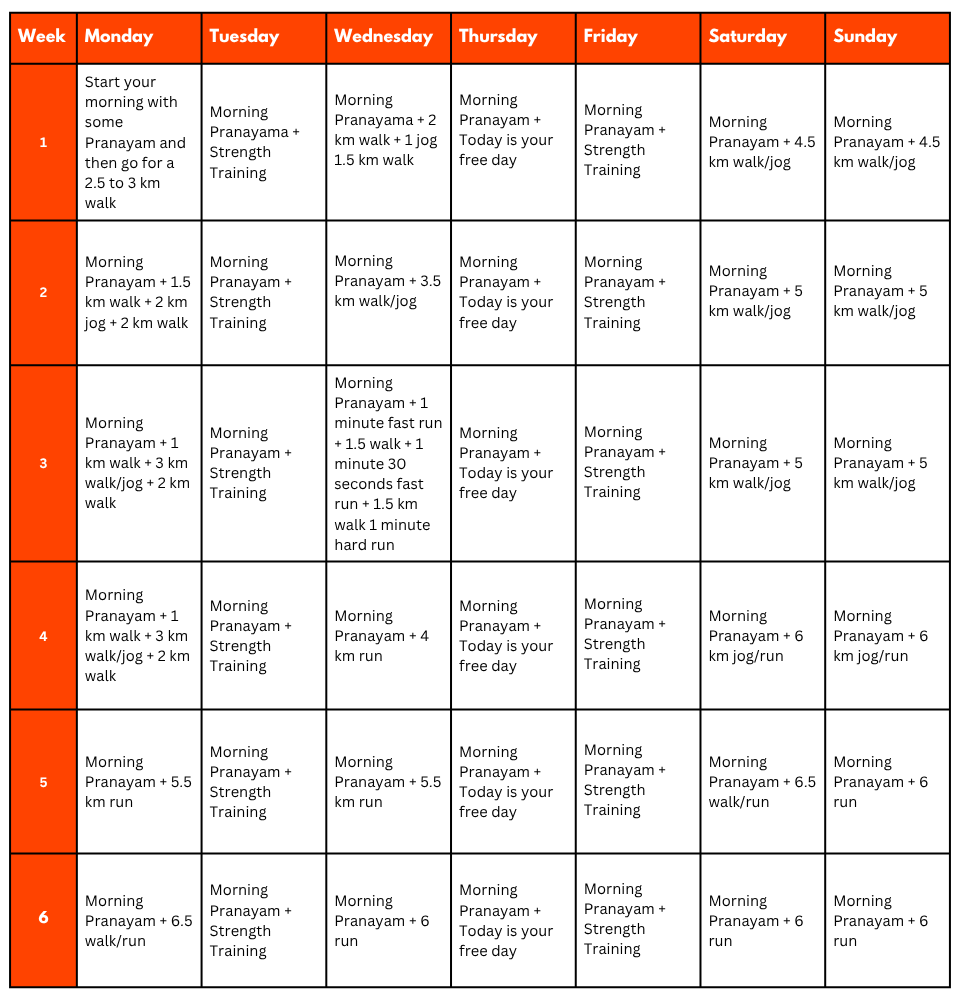
Pro Tip: If you have time, you can skip the Sunday training and go for a long-distance walk or mini day-hike (7–10 km) with a loaded backpack to simulate real trekking conditions. A short 1-day hike around your city/town can help a lot.
Mental Preparation
Physical strength is only half the journey, the other half is mental resilience. The trail takes you through remote clearings, steep climbs, cold starry nights, and no mobile connectivity. Be prepared to:
(I) - Detach from the digital world.
(II) - Embrace basic mountain living (camping, toilet tents, limited electricity).
(III) - Push through moments of fatigue, weather discomfort, or altitude effects.
A positive mindset, patience, and the ability to adapt will carry you farther than muscle ever could.Himalayan Hikers is a reputable trekking company that places a high priority on safety. Here are some of the safety measures they take to ensure the safety of their clients during the Trek:
Experienced Guides: Himalayan Hikers hires experienced and certified guides who are well-versed in the terrain, weather conditions, and local culture. These guides have first-hand knowledge of the routes and are equipped to handle any emergency situations that may arise.
Proper Gear: The company provides all the necessary gear and equipment to their clients to ensure comfort and safety during the trek.
Hygiene and Sanitation: Himalayan Hikers places great emphasis on hygiene and sanitation during the Trek. They provide clean drinking water, hand sanitizers, and toilet tents to ensure that their clients are healthy and comfortable.
Emergency Services: The company has a well-defined protocol for handling emergency situations. They have a team of trained medical professionals who are available 24/7 and can be quickly mobilized in case of an emergency.
Acclimatization: Himalayan Hikers follows a gradual acclimatization process during treks to ensure that their clients adjust to the high altitude gradually. They also monitor the health of their clients regularly and provide necessary medical attention if required.
Overall, Himalayan Hikers places a great emphasis on safety and takes all necessary measures to ensure the safety and well-being of their clients during treks.
Transport Facility Manali To Manali
Forest Permit and entrance fee
Accommodation in tents on twin share basis
All meals: breakfast, packed lunch, tea, coffee, snacks, soup and dinner
(All camping gears)
High quality tents
Sleeping bags
Mattress
Liner
Pillow
Separate Toilet tents – Ladies and Gents
Dining Tent
Dining Table
Porters
Helper
Mules
Kitchen team
Radio Walkie Talkie for Communication
Good Experience Trek Leader guide and Technical guide
Medical Kit
Oxygen Cylinders
Crampons and Gaiters
Personal Insurance
Medical Certificate
Personal toiletry Items and Personal Medicine kit
On first day En Route to base camp the Breakfast and Lunch are Not Included
Last Day En Route Lunch and Dinner are Not Included
Important Note
No important note.
Map not available for this trek.
No FAQs available for this trek.


