


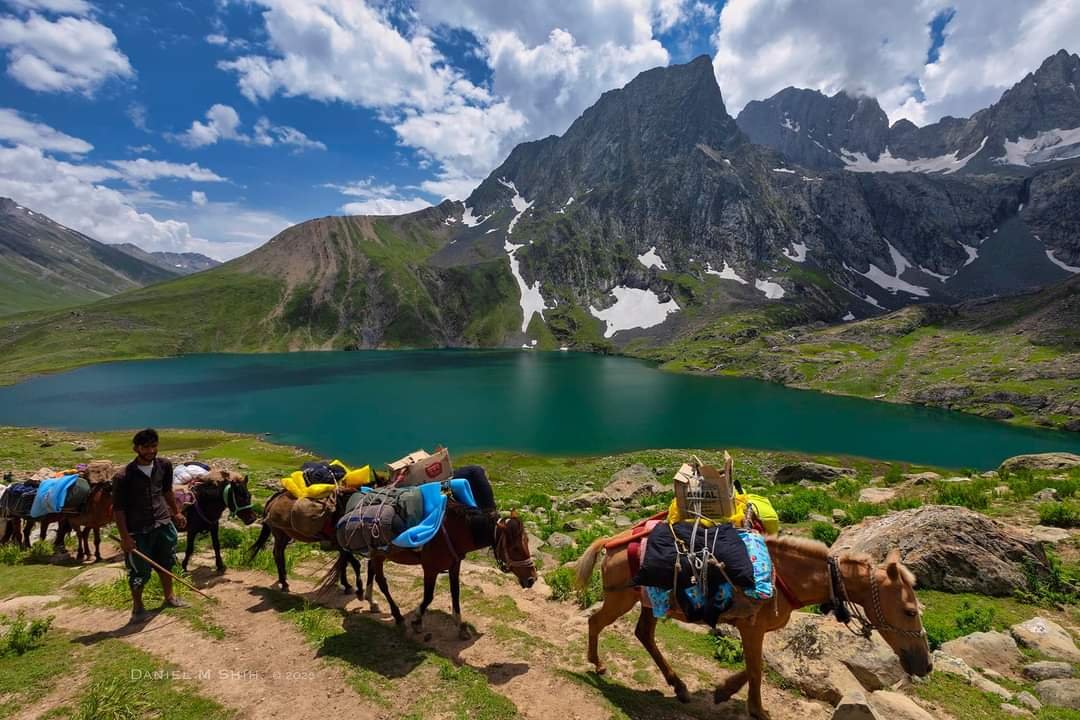
The Kashmir Great Lakes Trek is a popular trekking route in the Indian state of Jammu and Kashmir. The trek takes you through stunning alpine meadows, high-altitude lakes, and breathtaking mountain passes. It is considered to be one of the most beautiful treks in India.
During the trek, you will pass through several beautiful lakes, including Gangabal Lake, Nundkol Lake, and Tarsar Lake. You will also cross high-altitude mountain passes, such as the Nichnai Pass and the Gadsar Pass, which offer stunning views of the surrounding Himalayan peaks.
The best time to undertake the Kashmir Great Lakes Trek is from July to September when the weather is pleasant and the trekking conditions are favorable. However, it is important to note that the region is prone to occasional landslides and flash floods, so it is always advisable to check the weather forecast before starting the trek and to take appropriate precautions.
Their beauty is incomparable! During the trek, go through the lavish meadows, get panorama views of the mountains and explore the aqua-green alpine lakes. Certainly, each day on this trek is perfect!
The bliss is the heavenly meadows of Kashmir. A number of pine and maple trees grow here. Further, below Gadsar pass wildflowers grow in abundance and ahead the fields of Satsar are plain.
So, experience the grandeur of the Kashmir Great Lakes Trek and add it to the Diary of your Himalayan Journey!
The Kashmir Great Lakes trek is a Beautiful trek in the Himalayas, offering stunning views of alpine meadows, high-altitude lakes, and snow-capped peaks. It is difficult to say which part of the trek is the best as every day on the trail offers something unique and memorable.
Few Highlights of the Kashmir Great Lakes Trek
- Nichnai Pass: This is the first high-altitude pass on the trek, which offers panoramic views of the valley below and the surrounding peaks.
- Vishansar and Kishansar Lakes: These twin lakes are the most picturesque spots on the trek, with crystal clear water reflecting the snow-capped peaks in the background.
- Gadsar Pass: This is the highest pass on the trek and offers stunning views of the surrounding mountains.
- Tarsar Lake: This is another beautiful high-altitude lake, surrounded by lush green meadows and towering peaks.
- Sonamarg: The trek ends in Sonamarg, a picturesque hill station known for its stunning natural beauty and adventure activities like skiing and trekking.
Overall, the entire Kashmir Great Lakes trek is a feast for the senses, with breathtaking landscapes, diverse flora and fauna, and warm hospitality of the local people making it a once-in-a-lifetime experience.
Why Gadsar Pass is the Star of the Kashmir Great Lakes Trek?
Get Amazed On Kashmir Great Lakes Trek, All of the lakes are amazing but Gadsar is untouched because of its high altitude (13800 feet above. It lies against a glacier and is surrounded by a meadow where wildflowers grow in abundance. Therefore, it perfectly adds beauty to the picturesque valley. The high Gadsar Pass offers lovely valley views and offers the sight of Kishansar and Vishansar– The two Lakes. On the other hand lies lavish grasslands of Gadsar valley. The Kashmir Great Lakes trek is one of the most popular treks in India, and for good reason.
Here are some reasons why people undertake this trek:
- Scenic Beauty: The trek offers breathtaking views of the high-altitude lakes, snow-capped peaks, and verdant meadows that are unique to the Himalayas. The landscape changes with every step, making it a photographer’s delight.
- Adventure: The trek is challenging and involves long hours of walking over rugged terrain. It offers a chance to push oneself physically and mentally and experience the thrill of trekking in the high mountains.
- Cultural Experience: The trek passes through remote villages where trekkers can interact with locals and get a glimpse of their way of life. This is a great opportunity to learn about the local customs, traditions, and cuisine.
- Wildlife: The trek passes through some of the most bio-diverse regions in the Himalayas, and trekkers can spot a variety of wildlife, including brown bears, musk deer, and snow leopards.
- Spiritual Experience: The trek takes you through some of the most pristine and serene landscapes in the Himalayas, offering a chance to connect with nature and experience a sense of inner peace and tranquility.
Overall, the Kashmir Great Lakes trek is a great way to explore the beauty of the Himalayas and experience the thrill of adventure in a pristine natural environment.
If you are planning to do the Kashmir Great Lakes trek, here are some main points to keep in mind:
- Trekking Season: The best time to do this trek is from July to September when the weather is pleasant and the skies are clear. However, the weather can be unpredictable, and it is important to be prepared for rain, snow, and cold temperatures.
- Fitness Level: The Kashmir Great Lakes trek is a moderate to difficult level trek, and it requires a good level of fitness. You should be able to walk for 6-7 hours a day over uneven terrain and at high altitudes.
- Altitude Sickness: The trek involves climbing to high altitudes, and altitude sickness can be a problem for some trekkers. It is important to acclimatize properly, drink plenty of water, and take necessary precautions to prevent altitude sickness.
- Permits: You need to obtain a permit from the local authorities to undertake the trek. The permit is usually obtained by the trekking agency you choose to go with.
- Equipment: You need to have proper trekking equipment like trekking boots, warm clothes, rain gear, and a good quality backpack. It is important to choose the right equipment as it can make a big difference in your comfort level on the trek.
- Environment: It is important to respect the environment and follow the ‘Leave No Trace’ principles. You should not litter or damage the fragile ecosystem of the Himalayas.
- Safety: You should always trek with a guide and ensure that you have proper communication equipment in case of an emergency. It is also important to carry a first aid kit and any necessary medication with you.
By keeping these main points in mind, you can have a safe and enjoyable trekking experience in the Kashmir Great Lakes region.
Why choose the Kashmir Great Lakes Trek?
Before heading towards the itinerary, it is really essential to perceive the reason behind choosing Kashmir great lakes trek.
See firstly, the trekking distance is a total of by taxi 125 Km from Srinagar to Srinagar and on foot 68 km which is to be covered in 6 nights and 7 days. From Srinagar to Srinagar Kashmir Great Lakes trek is a low altitude mountain trek Altitudes is 13850 feet. The Starting trail is easy to moderate as compared to other treks this is a Moderate trek. So this trek is best for family and beginners.
Need proper gear & clothing for sub-zero temperatures
Probably, You got to see so many heavenly bodies at one place like the panoramic view of the Himalayan ranges in Kashmir Ghati, you can see pine forests, different varieties of flora and fauna beautiful twin lakes surpassing bona fide Kashmiri culture. Also, Do spare time in Interaction with our local team, and you will get to know about some of the ancient tales of Indian mythology and our local cultures, there is good ideas for trekkers. Beautiful landscapes so carry proper photo gear and extra battery backup. The backpack should not exceed 12 kg only.
Trekkers carry a photo ID, Adhar Card, Passport, Visa, Medical certificate, and trek insurance for entry at forest check posts on the trek it is very important.
Will there be electricity in the Kashmir Great Lakes Trek
Let me tell you that there is no electricity in the forest area of Kashmir great lakes trek. Here we use Stobe Light and or Solar Light, candlelight at the nights. If you come on this trek, then you should bring your own headlight and your camera with full charge, if possible, it would be good to bring extra battery backup, and also bring the phone after full charge, today people most phones use the same. You will get the last electricity only in our Home Stay Sonamarg base, where you have to charge the battery of your phone and camera at night.
What to pack for Kashmir Great Lakes Trek
Warm clothes, sleeves, wind shelter, comfortable clothing, and extra warm clothes so that you can enjoy trekking. A raincoat is the necessary
- Footwear: A well-fitted trekking footwear shoes are highly recommended. If you wear an uncomfortable pair of shoes, your feet will be hurt.
Self-Certificate of Emergency Breakout
Emergency Breakout in The Kashmir Great Lakes Trek?
Trekking in the Himalayas is not a cup of tea but it is a rewarding experience. However, it’s important to keep things in mind when it comes to Safety. One must know about the weather conditions, the altitude gain, fitness, and other factors that can wreck your experience. In such adverse conditions, you are solely responsible for your well-being and act maturely.
Safety Tips For Safe Trekking: Preparations before the Trek
You’ve to understand that treks are away from cities and medical help is not always easily available. So, ifyou are heading for an adventurous trekking trip, stick to certain trekking guidelines and tips. Following these simple tips will help make the trek more fun and experiential for you as well as your fellow trekkers.
These tips and guidelines cater to useful and requisite information about your fitness training, packing and health precautions to be taken before and during the trek.
- Firstly, when you start, target 5 km in 40 minutes.
- Then gradually increase your pace by running at least 4 times a week. Then try to bring it down to 5 km in less than 37 minutes.
- If you are a person who prefers cycling over running then your target must be 22 km means you should be able to cover 22 km in 60 minutes.
- Walking is a great exercise that gives great shape to your legs and your body. It helps in burning calories and cut down excess weight and strengthens the heart.
- Jogging is effective in increasing the human lifespan and makes your lungs stronger. It is an aerobic activity that requires a lot of oxygen. This is a great exercise for fighting obesity and staying healthy.
- Squats are the best form of functional exercise to improve stability. They also strengthen your legs, thighs, hips, and hamstring.
- Another great cardiovascular exercise is pushing your body upstairs after stairs. This is regarded as the best exercise for increasing strength and power.
Kashmir Great Lakes Trek Complete Guide
Our mission has always been to ensure that no trekker steps into the Himalayas without the right perspective. A trek is not just a checklist of summits; it is a serious commitment to the outdoors. Having the right information is what separates a reckless climb from a soulful journey.
This section serves as your definitive manual for the Kashmir Great Lakes Trek. We have distilled years of mountain experience and real-time feedback into this guide to give you a clear, honest picture of the trail.
We provide this depth of information because we want you to be more than just a visitor—we want you to be a prepared, responsible trekker who respects the mountains as much as we do.
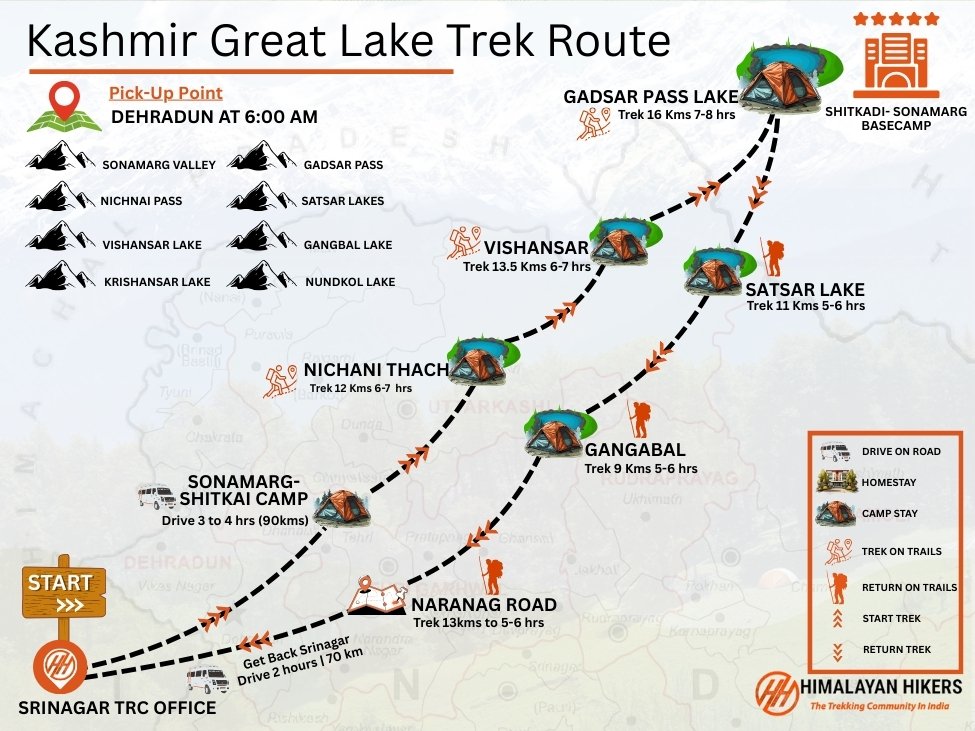
DAY 01- Pickup Point TRC – Near Krishna Dhaba Srinagar | Pick-up time :1:00 pm | Drive to Shitkai Camp Himalayan Hikers
Drive Distance: 90 km | Duration: 03-04 hours | Altitude: 8,625 ft | Overnight Stay Camp – Twin Sharing
DAY 02- Trek from Shitkadi to Nichani Thach | Trek Distance: 12 km | Trek Time: 6/7 hours | Altitude: 11,605 ft | Overnight Stay Camp – Twin Sharing
DAY 03- Trek from Nichani to Vishansar via Nichani Pass | Trek Distance: 13.5 km | Trek Time: 6/7 hours | Altitude: 13,225 ft | Overnight Stay Camp – Twin Sharing
DAY 04- Trek from Vishansar to Gadsar Lake via Gadsar Pass View Point 13,785 ft | Trek Distance:: 16 km | Trek Time:: 7/8 hours | Altitude: 10,725 ft | Overnight Stay Camp – Twin Sharing
DAY 05- Trek from Gadsar Lake to Satsar Lake | Trek Distance: 11 km | Trek Time: 5/6 hours | Altitude: 11,995 ft | Overnight Stay Camp – Twin Sharing
DAY 06- Trek from Satsar Lake to Gangabal via Zaj Pass Viewpoint | Trek Distance: 09 km | Trek Time: 5/6 hours | Altitude: 11,885 ft | Overnight Stay Camp – Twin Sharing
DAY 07- Trek from Gangabal Lake to Naranag Road Head | Trek Distance: 13 km | Trek Time: 5/6 hours | Altitude: 7,805 ft | Same Day Drive to Srinagar TRC – Distance: 70 km | Duration: 2 hours
Day 1
Day 2
Day 3
Day 4
Day 5
Day 6
Day 7
Day 1: Pick-up from Srinagar TRC - Krishna Dhaba, 1:30 PM, drive to Shitkadi via Sonamarg village - overnight stay, camping
Total distance - 90 km - 4-hour journey
Mode of travel - Taxi - Innova - Sumo - Bolero
Altitude - Shitkadi Camp - 7780 ft
Overnight stay - Camping - shared basis for two people
Transportation arranged by Himalayan Hikers - Pick-up from Srinagar TRC - You must reach Srinagar. Reach your base camp in 4 hours. Overnight stay at the camp.
The route from Srinagar TRC to Shitkadi Camp via Sonamarg village offers breathtaking views of the Kashmir Valley and the surrounding Himalayan mountains.
Start your journey with Himalayan Hikers from Srinagar TRC: Begin your journey at the Srinagar Tourist Reception Centre (TRC), a central location in Srinagar, Kashmir.
Drive from Srinagar via Sonamarg. Head north from Srinagar towards the picturesque town of Sonamarg. This leg of the journey will take you through beautiful landscapes, including lush meadows, flowing rivers, and tall pine forests. The road winds through the mountains, offering breathtaking views at every turn.
As you arrive in Sonamarg, the majestic peaks of the Himalayas will greet you. Sonamarg, meaning "field of gold," is known for its pristine beauty and is a popular tourist destination.
Hike to Shitkadi: After enjoying the sights of Sonamarg, continue your journey towards Shitkadi. The route from Sonamarg to Shitkadi offers panoramic views of the surrounding mountains and valleys. You'll pass through quaint villages and terraced fields, offering a glimpse into the local lifestyle.
Arrive at Shitkadi: Finally, you'll reach Shitkadi, a tranquil destination nestled among the Himalayas. Here, you can relax and enjoy the tranquility of the surroundings.
Shitkadi Camp is 9 kilometers from Sonamarg, and the trek begins there. You'll need to travel to Srinagar, where a vehicle will be arranged. You'll reach Himalayan Hikers Base Camp in 4 hours. Stay overnight at the camp.
Today we are staying at Shitkadi Camp - Enjoy your 1st Camp and relax, take evening Tea Snacks, and see the mountain sunset view. Overnight stay at Camp on Twin Sharing.
Day 2: Trek from Shitkadi Camp to Nichnai Camp
Total distance – 11 km – 6/7 hours journey
Mode of journey – On foot
Altitude – Nichnai – 11,888 feet
Night Stay – Our Camp – on twin share basis
The trek from Shitkari Himalayan Hikers Camp to Nichnai Camp, a must-see for you, offers adventurers a chance to admire the rugged beauty of the Kashmir region. Here are the route, locations, and trek details.
Trek Route Information
After breakfast, you begin your trek from Shitkari Camp. From the Shitkari campsite, you begin your trek with Himalayan Hikers Guides. The route is initially slightly uphill, located in picturesque surroundings with panoramic views of high mountains and lush greenery.
Trek Through the Valley: This route initially leads through a valley, offering panoramic views of the surrounding peaks and meadows. Along the way, you will pass through dense forests and open grasslands.
Climb to Nichnai Camp: As you progress along the trail, you will gradually ascend towards Nichnai Camp. Depending on the specific route chosen, the path may include moderate to steep slopes.
Shitkadi Camp: Located in the Kashmir region, Shitkadi Camp is perched at an altitude with panoramic views of the surrounding landscape. It serves as a starting point for various treks in the region.
Nichnai Camp: Located at a higher altitude than Shitkadi, Nichnai Camp offers trekkers a tranquil environment amidst the mountains. This campsite is often located on the banks of a river or stream, providing a refreshing atmosphere.
Today's Trek Level:
The trek from Shitkadi Camp to Nichnai Camp is generally classified as moderate to challenging, depending on factors such as weather conditions, trail terrain, and individual fitness level.
Elevation Gain: Trekkers can expect a significant increase in altitude during this trek, as they ascend from the lower valley to the higher elevations of Nichnai Camp. Proper acclimatization and pacing are essential to ensure a safe and enjoyable experience.
The duration of the trek can vary depending on the specific route chosen and the speed of the trekking group. Reaching Nichnai Camp from Shitkadi can take approximately 6–7 hours, including breaks for rest and sightseeing.
Today we are staying at Nichnai Camp – Enjoy your trek and relax, take evening Tea Snacks, and see the mountain sunset view. Overnight stay at Camp on Twin Sharing.
Day 3: Trek from Nichani to Vishansar via Nichani Pass | Trek Distance: 13.5 km | Trek Time: 6–7 Hours | Altitude: 13,225 ft | Overnight Stay: Camp (Twin Sharing)
Day 3 of the KGL Trek is one of the most exhilarating and scenic days, as trekkers traverse the Nichani Pass to reach the stunning Vishansar Lake. This day combines high-altitude trekking, panoramic mountain views, and the thrill of crossing a Himalayan pass, making it a pivotal segment of the itinerary.
Morning: Start from Nichani
The day begins early at Nichani Camp, surrounded by alpine meadows and snow-dusted peaks. After a nourishing breakfast, trekkers prepare for the ascent to Nichani Pass. The trail starts gradually, allowing your body to adjust to the increasing altitude and the crisp Himalayan air. Walking through lush meadows and small streams, the surroundings begin to hint at the grandeur of what lies ahead.
Ascent to Nichani Pass
The trek intensifies as you approach Nichani Pass at 13,225 ft (approximately 4084 meters). The path becomes rocky and steep, demanding stamina, focus, and careful footing. The higher you climb, the more the landscape transforms—from green meadows to rugged high-altitude terrain with glacial moraines and sparse vegetation.
Reaching the top of Nichani Pass is a breathtaking experience. From the summit, trekkers are rewarded with sweeping panoramic views of the surrounding Himalayan ranges, including glacial valleys, snow-capped peaks, and distant alpine lakes. This is a perfect spot for photography and a well-deserved rest while soaking in the raw beauty of the mountains.
Descent to Vishansar Lake
The trail then descends toward the mesmerizing Vishansar Lake, which lies amidst rolling meadows and rocky ridges. The descent is gradual, allowing trekkers to absorb the serene surroundings while navigating the alpine terrain carefully. The lake itself, with its crystal-clear waters reflecting the surrounding peaks, is a pristine high-altitude gem, home to trout and surrounded by snow-dusted slopes.
Evening: Camp at Vishansar
Upon arrival, the camp is set up near the lake, offering a peaceful and scenic environment. Trekkers can enjoy a wholesome meal, relax by the lakeside, or simply marvel at the reflective waters and surrounding mountains. The night is spent in twin-sharing tents, under a star-studded sky, accompanied by the calm whispers of the high-altitude wilderness.
Highlights of the Day:
- Challenging yet rewarding high-altitude trek
- Panoramic views from Nichani Pass
- Walking through alpine meadows and rocky terrains
- Exploring Vishansar Lake and its serene surroundings
- Overnight camp experience under clear Himalayan skies
Day 4: Trek from Vishnusar Lake to Gadsar Lake
Trek Distance – 16 km – 7/8 hours journey
Travel Mode – On foot
Altitude – Gadsar Lake – 13,850 ft
Overnight – Campsite – Twin sharing
Today's trek from Vishnusar Lake to Gadsar Lake is a scenic journey through the panoramic views of the Kashmir Himalayas. Below are the route details, terrain, and major highlights.
Complete Route Details
Departure from Vishnusar Lake: The day begins with a trek from the beautiful Vishnusar Lake, surrounded by towering peaks and pristine alpine scenery.
Climb to Gadsar Pass: The trail gradually ascends toward Gadsar Pass and may involve steep slopes and rocky terrain. As you climb higher, you are rewarded with panoramic views of the surrounding valleys and mountains.
Descent to Gadsar Lake: After crossing Gadsar Pass, the trail descends toward Gadsar Lake. Some sections can be steep and rocky, passing through alpine meadows and rugged landscapes.
Arrival at Gadsar Lake: You finally arrive at the stunning Gadsar Lake, an alpine jewel surrounded by high peaks. The clear waters reflect the surrounding mountains, creating a breathtaking scene.
Today's Trek Level
Moderate to Challenging: This trek is classified as moderate to challenging, depending on elevation gain, weather conditions, trail terrain, and individual fitness levels.
Altitude Gain: Trekkers experience a significant altitude gain while climbing to Gadsar Pass, followed by a descent to Gadsar Lake. Proper acclimatization and a steady pace are essential.
Rocky Terrain: The route includes rocky sections, especially near Gadsar Pass. Good trekking shoes and trekking poles are highly recommended.
Key Highlights
Scenic Views: Enjoy spectacular alpine scenery with snow-covered peaks, green meadows, and untouched lakes throughout the trek.
Gadsar Pass: Crossing the pass offers some of the most dramatic panoramic views of the entire trek.
Gadsar Lake: A serene and peaceful campsite, perfect for relaxation amid nature’s raw beauty.
Today we stay at Gadsar Lake Camp – Enjoy your trek, relax with evening tea and snacks, witness a beautiful mountain sunset in front of Gadsar Lake, and enjoy an overnight stay at the camp on twin sharing.
Day 5: Trek from Gadsar Lake to Satsar Lake
Trek Distance – 11 km – 4–5 hours
Travel Mode – On foot
Altitude – Satsar Lake – 12,100 ft
Overnight – Camp stay – Twin sharing
Crossing a stream and heading uphill, you will move above the tree line. As you gain altitude, the river and trees remain visible below, and the trail gradually leads you out of the river valley.
The trek from Gadsar Lake to Satsar Lake is a beautiful section of the Kashmir Great Lakes Trek, offering breathtaking scenery and peaceful high-altitude landscapes.
Complete Trek Route Information
After breakfast, the trek begins from the scenic banks of Gadsar Lake, surrounded by towering peaks and pristine alpine surroundings.
The route passes through alpine meadows, rocky sections, and high-altitude grasslands, making this trek especially rewarding.
Depending on the route, trekkers may cross small high-altitude passes that offer panoramic views of the surrounding mountains.
The trek concludes at Satsar Lake, a cluster of seven interconnected lakes nestled among the mountains, known for their serene beauty and tranquil atmosphere.
Trek Difficulty Level
Moderate to Challenging: The trek difficulty depends on elevation gain, trail conditions, and individual fitness levels.
Altitude Gain: Some elevation gain is expected, especially while crossing higher sections of the trail. Proper acclimatization and steady pacing are important.
Varied Terrain: The trail includes rocky paths, grasslands, and alpine meadows, requiring good trekking footwear.
Highlights of the Trek
Alpine Beauty: Enjoy panoramic views of snow-capped peaks, lush valleys, and untouched Himalayan landscapes throughout the day.
Satsar Lake: The highlight of the day, offering stunning reflections of the surrounding mountains across its interconnected lakes.
Wildlife Viewing: Watch for birds and occasional wildlife native to the Kashmir Himalayas.
Today we stay at Satsar Lake Camp – Relax after your trek, enjoy evening tea and snacks, witness a beautiful mountain sunset overlooking Satsar Lake, and spend the night at the campsite on twin sharing.
Day 6: Trek from Satsar Lake to Gangabal Camp
Trek Distance – 9 km – 5–6 hours
Travel Mode – On foot
Altitude – Gangabal – 11,655 ft
Overnight – Camp stay – Twin sharing
Today’s trek includes a mix of gradual ascents and descents. After about half an hour of trekking, you will reach the largest and final campsite at Gangabal.
The trek from Satsar Lake to Gangabal Camp is one of the most scenic sections of the Kashmir Great Lakes Trek, known for its dramatic alpine landscapes and pristine high-altitude lakes.
Complete Trek Route and Views
After breakfast, depart from Satsar Lake. The trek begins from the serene banks of the seven interconnected Satsar Lakes, surrounded by mountains and alpine meadows.
The trail passes through varied terrain, including grasslands, rocky paths, and occasional steep ascents and descents, offering stunning views throughout the day.
Depending on the route, you may cross high-altitude sections that provide panoramic views of surrounding peaks and valleys.
Arrival at Gangabal Camp marks the end of today’s trek. The campsite is located near Gangabal Lake, one of the largest and most beautiful lakes in the region, with spectacular views of Mount Harmukh and nearby peaks.
Trek Level
Moderate: The trek is generally considered moderate to challenging, depending on weather, trail conditions, and individual fitness.
Some elevation gain is expected, especially on steeper sections. Proper acclimatization and a steady pace are important for a safe and enjoyable trek.
Varied Terrain: The route includes rocky paths, open meadows, and occasionally snow-covered sections depending on the season. Follow your guide’s instructions carefully for stability and safety.
Main Attractions & Viewpoints
Enjoy continuous views of snow-capped peaks, lush valleys, and crystal-clear lakes throughout the trek.
Gangabal Lake: The highlight of the day, offering breathtaking reflections of surrounding mountains and a peaceful atmosphere ideal for relaxation and exploration.
Wildlife Encounters: Keep an eye out for birds and wildlife such as marmots, mountain goats, and occasionally the rare Himalayan ibex.
Day 7: Trek from Gangabal to Naranag Road Head (13 km) & Same Day Drive to Srinagar (70 km)
You will reach Srinagar between 6:00 PM and 7:00 PM.
Last Day with Himalayan Hikers Team – The trek from Gangabal to Naranag Road Head marks the final leg of the Kashmir Great Lakes Trek, followed by a scenic drive back to Srinagar.
Trek from Gangabal to Naranag Road Head
Distance: Approximately 13 km
Route: The trail gradually descends from Gangabal Camp to Naranag Road Head, passing through alpine meadows, pine forests, and scenic mountain landscapes.
Trek Level: Moderate
Duration: Depending on trail conditions and group pace, the trek generally takes around 3–4 hours.
Drive from Naranag Road Head to Srinagar
Distance: 70 km by taxi
Route: The drive follows a scenic countryside route, passing lush fields, villages, and winding mountain roads before reaching Srinagar.
Estimated Arrival at Srinagar (TRC)
Arrival Time: You can expect to reach Srinagar between 6:00 PM and 7:00 PM, depending on trekking and driving conditions.
It is recommended to start early from Gangabal Camp to allow sufficient time for both the trek and the drive.
Ensure transportation from Naranag Road Head to Srinagar is arranged in advance to avoid delays.
Weather conditions, daylight hours, and personal fitness levels should be kept in mind while planning the day’s schedule.
Few Factors to consider regarding the difficulty level of the trek
- Distance: The Kashmir Great Lakes trek covers a distance of approximately 68 kilometers (39 miles) over a span of 6-8 days, depending on the itinerary. This requires walking an average of 10-16 kilometers (5-6 miles) per day, which can be physically demanding if you are not accustomed to long-distance trekking.
- Altitude: The trek reaches an altitude of around 4,200 meters (13,780 feet) at its highest point. Acclimatization is crucial at such altitudes to prevent altitude sickness. It is recommended to take it slow, drink plenty of water, and listen to your body during the trek.
- Terrain: The trail includes steep ascents and descents, rocky sections, and uneven paths. Some sections may be slippery, especially during monsoon or post-monsoon seasons. Proper hiking boots with good grip are essential to navigate these terrains.
- Weather: The weather in the Kashmir region can be unpredictable. It is advisable to trek during the summer months (June to September) when the weather is relatively stable. However, even during this period, you may encounter rain, fog, or chilly temperatures, particularly at higher altitudes.
While prior trekking experience is not mandatory, it is recommended that you have a basic level of fitness and stamina to enjoy the trek comfortably. Regular cardiovascular exercises, such as jogging, cycling, or hiking, can help improve your endurance. It’s also essential to pack appropriate clothing, carry necessary supplies, and follow the instructions of your trek leader or guide to ensure a safe and enjoyable experience.
Kashmir Great lakes trek safe for me?
Yes, Kashmir Great Lakes Trek is a safe trek if you are going with a good trekking team which you must know before booking yourself, It is important for you to know whether the bow trekking organization with which we are going is right or not, And if possible, trek with a local trekking organization, you can do the same help all the time. then your trek can be very good and memorable The minimum age required to trek the Kashmir Great Lakes trek is 15 years and the maximum is 55 years. The rest depends on your fitness.
Unusual Attractions of KGL Satsar Lake in Kashmir Great Lakes Trek
The meadows of Satsar are surreal and a stream flows through them. Satsar Lake is an addition to the beauty of the valley.
In addition, another attraction of this trek is the descent from Gangabal. During the downhill, the trek gets the most surpassing views. Look backward and spot lofty Harmukh peak. Further witness yellow flowers growing together and a single hut, this setting is idyllic. These settings can only be found in Kashmir.
Also, The Satsar Lake and green Bugyal are more beautiful Greenland in Kashmir valley; this is beautiful place stands in between high snow-covered peaks which together make an excellent sight. On the other hand, the meadows remain covered in snow. So, consequently, it turns out to be the most fantastic Monsoon trek in Kashmir valley. And, also an excellent Skiing destination.
This roughly 10–11 week window is the only feasible period for the Kashmir Great Lakes trek due to accessibility, snowmelt patterns, and weather stability.
Early Season First week of July to the end of July
- This trek begins in early July when the snow begins to melt.
- Green grass begins to grow in the lower meadows, while higher elevations (such as the Gadsar Pass at an altitude of approximately 13,750 feet) may still have patches of snow. This makes this trek very special.
- Ideal for trekkers who want to see snowflakes and experience the blend of winter and summer landscapes. This will be the most special time.
- Less crowded than mid-season.
- Excellent photography opportunities with snow-capped peaks and partially frozen lakes.
- Nights are slightly cooler (temperatures can drop to 0°C or even below).
Early Season First week of August to the end of August
- This is considered the busiest season for the Kashmir Great Lakes Trek.
- The meadows are at their peak, covered in a dense blanket of flowers (especially blue poppies, daisies, and buttercups).
- The snow has completely melted from the passes, making the path smooth and safe.
- All the lakes have completely melted, and their waters are crystal blue.
- The weather is relatively stable and there is little rainfall.
- The most comfortable trekking conditions: Daytime temperatures range from 15-20°C and nighttime temperatures range from 5-8°C.
- If you want to take a good photo, this is the best time for that – clear skies, vibrant meadows, and lakes filled with reflections.
- Crossing rivers is safe because the snow has melted and stabilized. Himalayan Hackers recommends you to visit during this time.
Late Season Early to Mid-September
- The final hours are over before the hotel entrance.
- The meadows are full of grass; autumn colors are visible among the students.
- The weather on the Kashmir Great Lakes Trek is pleasant, but nights can get chilly (down to -2°C in higher camps).
- Some rivers can be chilly, but water sources are available.
Advantages of the KGL Trek
- September is less crowded than July or August.
- Great for those who enjoy serene landscapes and ethereal breezes. Those who want to make their trek a special memory.
- Transparent skies – a great time for viewing the true colors and night photography.
- Early orders are more likely in mid-September (especially at the Gadsar Pass).
| Month | Scenery & Flora | Lakes | Weather | Trail Condition |
| Early July | Fresh snow melting, emerging flowers and grass | Partially frozen | Cool–Cold | Slightly-wet / Moderate |
| Late July | Green meadows, early bloom peak | Fully visible | Pleasant | Moderate route |
| August | Peak bloom, bright skies | Deep blue, mirror-like | Mild–Pleasant | Excellent Route or View |
| Early September | Golden meadows, fading flowers | Still clear | Cool–Cold nights | Dry & stable |
| Mid–Late Sept | Autumn hues | Starting to freeze slightly | Cold | Dry & stable |
Reach to TRC (Tourist Reception Centre) in Srinagar, the starting point for many treks, including the Kashmir Great Lakes Trek
1. By Air: Reaching Srinagar
The nearest airport to TRC Srinagar is the Sheikh ul-Alam International Airport (Srinagar Airport – SXR). It’s well-connected to major cities in India like Delhi, Mumbai, Bangalore, and Chandigarh. Once you land at Srinagar, you can reach the TRC as follows:
- Tarsar Marsar Trek Distance from Srinagar Airport to TRC>: 12 km (around 30 minutes by car).
- Options to Reach TRC from Airport:
- Taxi: Prepaid taxis are readily available at the airport. The fare is approximately ₹600–₹900, depending on the type of car and time of day.
- Airport Shuttle: Some hotels and travel agencies offer shuttle services from the airport to TRC.
2. By Road: Reaching Srinagar
If you’re coming by road, Srinagar is connected to nearby cities by National Highway 44. Key routes include:
- From Jammu: Srinagar is around 270 km from Jammu and can be reached via NH 44. The drive takes approximately 8–9 hours.
- From Delhi: If you’re driving from Delhi, the distance is around 870 km, and the trip takes about 18–20 hours. You can break the journey at Jammu. Bus Services:
- Jammu to Srinagar: JKSRTC (Jammu & Kashmir State Road Transport Corporation) runs regular bus services from Jammu to Srinagar. Semi-deluxe and deluxe buses are available.
- Private Bus Operators: Several private bus operators offer overnight bus services to Srinagar from Jammu.
3. By Train: Reaching Jammu, then Srinagar
There is no direct train service to Srinagar. The nearest major railway station is Jammu Tawi.
- Jammu Tawi Railway Station: It is around 270 km from Srinagar. From Jammu Tawi, you can either take a shared taxi, private cab, or bus to Srinagar.
- Shared Taxi: A shared taxi to Srinagar costs approximately ₹500–₹700 per person. The journey takes around 8–9 hours.
- Private Taxi: A private taxi would cost around ₹3,500–₹5,000, depending on the vehicle.
- Bus: There are both government and private buses that operate between Jammu and Srinagar (8–10 hours).
4. Reaching TRC Srinagar from Srinagar City
- Taxi or Auto-Rickshaw: Once you’re in Srinagar, TRC is centrally located in the city and can be easily reached by taxi or auto-rickshaw. Most locals are familiar with the TRC. Approximate Distance:
- From Dal Gate: 2 km (10 minutes by car/auto)
- From Lal Chowk (City Center): 2 km (10 minutes by car/auto)
5. Starting Your Trek from TRC Srinagar
- After arriving at TRC, you’ll either join your trekking group or board transport to Sonamarg/ Shitkadi Camp Himalayan Hikers Base Camp the ba(se camp of the Kashmir Great lakes trek trek distance from Srinagar is about 90 km.
- The drive from Srinagar to Aru takes around 3–4 hours by car or shared taxi.

Essential Gear for the Kashmir Great Lakes Trek Packing List
1. Trekking Gear & Bags
- Main Backpack (50–60 Liters): Must have good hip support and a rain cover.
- Daypack (20 Liters): Essential if you plan to offload your main bag; carries water, snacks, and a jacket.
- Trekking Poles: Highly recommended for stability on snowy slopes.
2. Clothing (The Layering System)
- Base Layer (2-3 Pairs): Quick-dry, moisture-wicking thermals (top and bottom).
- Mid Layer (2): Fleece jackets or sweaters for insulation.
- Outer Layer (2): A high-quality padded down jacket (rated for -10°C).
- Trekking Pants (2): Water-resistant and windproof pants. Avoid jeans at all costs.
- T-shirts (3): Collared, full-sleeve dry-fit tees to prevent sunburst on the neck.
3. Footwear & Socks
- Trekking Boots: High-anchor, waterproof boots with good grip Decathlon Forclaz or similar MH 100) Asain, Jonmart hiking Shoes.
- Woolen Socks (4 Pairs): For sleeping and extra warmth at night.
- Cotton Socks (4 Pairs): For trekking during the day.
4. Headwear & Accessories
- Sun Cap: To protect against UV rays during the day.
- Woolen Cap/Balaclava: Must cover your ears to prevent heat loss.
- Neck Warmer/Buff: Protects your face from cold winds.
- Gloves: One pair of fleece liners and one pair of waterproof outer gloves.
- Sunglasses: Polarized/UV protected to prevent snow blindness.
5. Personal Hygiene & Toiletries
- Sunscreen (SPF 50+) and Lip Balm.
- Moisturizer and Sanitizer.
- Toilet paper and Biodegradable wet wipes.
- Toothbrush, Toothpaste, and a small quick-dry towel.
6. Health & First Aid
- Personal Medikit: Band-aids, crepe bandage, and antiseptic.
- Anti-Altitude Sickness: Diamox (consult your doctor first).
- Pain Relief: Volini spray or Moov.
- Water Purification: Tablets or a LifeStraw.
Quick Tips for a Successful Trek with Himalayan Hikers
- Hydration: Drink at least 3/4 liters of water daily to help with acclimatization.
- Batteries: Cold drains phone and camera batteries fast. Keep them inside your sleeping bag at night to keep them warm.
- Eco-Friendly: "Pack it in, pack it out." Don't leave any plastic on the trail.
Must-Have Medicines for Kashmir Great Lakes Trek
1. Altitude & Breathing
- Diamox (Acetazolamide): The most common medicine for AMS (Acute Mountain Sickness). It helps your body acclimatize faster.
- Note: Start a preventive dose only after consulting your doctor, as it is a diuretic.
- Camphor (Kapur): Carrying a small pouch of camphor to smell can help some people feel more comfortable while breathing in thin air.
2. Pain & Inflammation
- Combiflam / Ibuprofen: For muscle aches, joint pain, or body fever after a long day of climbing.
- Dolo 650 (Paracetamol): For mild fever or headaches (often a first sign of dehydration or AMS).
- Diclofenac Gel/Spray (Volini/Moov): Essential for calf muscle cramps or knee pain during the descent.
3. Digestive Health (Very Important)
- Digene / Pudin Hara: For acidity or bloating caused by heavy meals at high altitudes.
- Ondem (Ondansetron): For nausea or vomiting (common symptoms of altitude sickness).
- Eldoper / Nor-Metrogyl: For loose motions or stomach infections.
- ORS / Electral: To prevent dehydration. Mix one sachet in your water bottle every day.
4. Respiratory & Cold
- Ascoril/Alex Syrup (or Lozenges): For "Khonchi" (dry mountain cough) caused by cold, dry air.
- Cetirizine / Okacet: For allergic reactions or a runny nose.
- Avomine: If you get motion sickness during the bumpy 10-hour drive from Dehradun to Sankri.
5. First Aid Basics
- Band-aids & Cotton: For small nicks.
- Crepe Bandage: In case of a minor ankle sprain on the snowy trail.
- Betadine/Dettol: Antiseptic for any cuts.
- Anti-fungal Powder: To keep your feet dry and prevent fungal infections from wet socks.
Mandatory Document Checklist for Kashmir Great Lakes Trek
1. Government Identity Proof (Original + 2 Photocopies)
- You must carry a valid, government-issued photo ID. This is required for forest check-posts at Shitkai Camp/ Sonamarg.
- Accepted: Aadhar Card, Voter ID, Driver's License, or Passport.
- Note: Keep two photocopies handy as one will be submitted at the Forest Office for your entry permit.
- Trek Insurance mandatory
2. Medical Fitness Certificate
- Himalayan Hikers prioritizes safety. You cannot start the trek without a certified medical report.
- Requirement: The certificate must be signed and stamped by a registered medical practitioner (MBBS Doctor).
- Validity: It should usually be issued within 15–30 days of the trek start date.
- Criteria: It should state that your blood pressure, heart rate, and lung health are normal for high-altitude trekking.
3. Disclaimer & Waiver Form
- This is a standard indemnity bond provided by Himalayan Hikers.
- What it is: A document stating that you understand the risks of high-altitude trekking and are participating voluntarily.
- Process: You can usually download this from their website, sign it, and hand it over at the Shitkai Camp Himalayan Hikers, /Sonamarg.

6-Week Kashmir Great Lakes Trek Training Plan Himalayan Hikers
Weeks 1-2: Building the Aerobic Base
- Running: 3-4 days a week. Focus on distance over speed. Target 5 km at an easy, conversational pace.
- Strength:
- Full Squats: 3 sets of 20 (For the long ascent to Nichnai).
- Calf Raises: 3 sets of 25 (Crucial for the long, meadow walks and boulder hopping).
- Superman/Lower Back: 3 sets of 15 (Essential for long days under a pack).
- Himalayan Hikers Logic: KGL is a long-distance trek (approx. 72 km). You need "Aerobic Efficiency." Focus on keeping your heart rate steady for long durations.
Weeks 3-4: The "Boulder & Pass" Transition
- Running: 4 days a week. Increase to 8 km. Include 1 day of slow hill repeats (climb for 2 mins, descend for 2 mins) to mimic the Gadsar Pass ascent.
- The Weight Factor: Twice a week, walk 10 km with a 5-7 kg backpack.
- Strength:
- Side Lunges: 3 sets of 15 (Vital for navigating the massive boulder fields near Gangabal).
- Step-Downs: 3 sets of 15 per leg (Mimics the descent from Gadsar, which is long and taxing on the quads).
- Gear Check: Ensure your boots are waterproof. KGL involves multiple stream crossings and marshy meadows. Wet feet lead to blisters.
Weeks 5-6: Peak Multi-Day Stamina
- Target: Run 10 km in 65-70 minutes. This ensures your heart can handle the sustained effort of 7-8 hour trekking days.
- The "Back-to-Back" Test: Walk 12 km on Saturday and 10 km on Sunday, both with a 8 kg pack. This simulates the fatigue of consecutive trekking days.
- Strength:
- Plank: 2 minutes (Core stability is key when crossing rocky sections with a shifting pack).
- Single-Leg Balance: 2 minutes per leg (To prevent ankle rolls on the uneven meadows).
KGL Trek "Briefing details
- The Boulder Zones: Between the lakes, you'll encounter fields of "talus" (broken rock). Don't rush. Use your trekking poles as "third and fourth legs."
- Sun Protection: The Kashmir meadows are wide open with zero tree cover. Training in the sun (safely) helps you adapt to the high UV exposure of the Gadsar plateau.
- Hydration: KGL is deceptively exhausting. Even though it feels cooler near the lakes, the dry air dehydrates you fast. Aim for 4L daily.
- The Gadsar Pass: This is the highest point (approx. 4,175 m). The ascent is steep, but the descent into the "Valley of Flowers" is where most trekkers fatigue. Save energy for the way down.
What to present at the Sitkari Base Camp (KGL Edition):
- The "Endurance" Log: Proof of at least two "back-to-back" 10km+ walks with a weighted pack.
- Lower Heart Rate: A resting heart rate (RHR) showing good recovery (ideally below 75 bpm).
- The 10km Benchmark: Completion of a 10km run/walk without significant joint pain.
"While these suggestions are designed to enhance your trekking experience, feel free to tailor your preparation to your own preferences if you maintain a good level of physical fitness."
Team Himalayan Hikers
Expert High altitude Kashmir Great lakes Trek Route
Himalayan Hikers High-Altitude Strategy & Alpine Safety
KGL Trek
KGL involves crossing multiple passes where weather can flip from sunny to a "white-out" in minutes. Safety in the Kashmiri highlands requires expert timing and physical monitoring.
- NIM & IMF Certified Leaders: Our trek leaders are not just guides; they are mountain experts trained at the Nehru Institute of Mountaineering. They understand the "Kashmiri weather pulse" and know exactly when to push for the pass and when to hold back.
- The "Three-Pass" Protocol: Crossing Nichnai, Gadsar, and Zaj Pass requires strategic energy management. We utilize a "Slow-Steady-Hydrate" pace, ensuring trekkers don't burn out before the steep ascent to Gadsar.
- Medical Vigilance: Since the trek remains above 3,500 m for most of its duration, we carry medical-grade Oxygen, specialized first-aid kits, and conduct twice-daily pulse-oximetry checks (Pulse at every camp, from Vishansar to Gangabal).
- Weather Intelligence: We maintain constant communication with our base to monitor western disturbances, ensuring we cross the high ridges only during safe weather windows.
Seamless "Srinagar to Narannag" Logistics
KGL is a linear trek that starts in Sitkari (Sonamarg) and ends in Naranag. Managing the transition across these sensitive zones requires local expertise.
- Premium Staging: Your journey begins with a seamless pickup from Srinagar and a comfortable stay at our handpicked campsites in Sonamarg, including a comprehensive briefing on the unique terrain of Kashmir.
- High-End Expedition Gear: We use 4-season North Face-style Dome tents designed to withstand the heavy winds and sudden rains of the high Himalayan plateaus. Our sleeping bags are rated for sub-zero temperatures, even during the "warmer" months.
- Permit & Security Handling: Trekking in Kashmir involves multiple checkpoints (Army and Forest Dept). Our local team handles all paperwork and liaisoning, ensuring your experience is stress-free and smooth.
Nutrition for the Alpine Traverse
Trekking 12–15 km a day at high altitude demands a specific caloric intake to prevent "hitting the wall."
- The Alpine Menu: We serve a four-time food mix of high-protein meals and local thermogenic foods. Expect garlic-infused soups to aid acclimatization and high-energy snacks for the long stretches between Nichnai and Gadsar.
- The 5L Hydration Rule: Dehydration is the leading cause of AMS. Our kitchen staff provides warm, filtered water at all camps to ensure you stay hydrated despite the cold wind.
KGL Enhanced Safety & Experience
| Feature | Benefit to the Trekker | The Himalayan Hikers |
|---|---|---|
| Gadsar Pass Support | Safety on the steep, rocky descent from 4,180 m. | Our guides use "human-anchor" spotting on tricky sections to prevent slips. |
| Acclimatization Pace | Significantly reduces the risk of AMS. | We incorporate a steady altitude gain, ensuring a "climb high, sleep low" rhythm. |
| Local Knowledge | Access to the best (and safest) photo spots. | Our local Kashmiri staff knows every hidden ridge and the safest spots for lake-side camping. |
| Emergency Evacuation | Rapid response in case of illness. | We maintain a dedicated pony-evacuation protocol for immediate descent if needed. |
Why We Are Different (KGL Context)
| Feature | Other Agencies | Himalayan Hikers trekking team |
|---|---|---|
| Campsite Selection | Crowded, noisy common areas. | Strategic Seclusion: We pick wind-shielded, pristine spots away from the masses for a true "Great Lakes" experience. |
| Staff Expertise | Seasonal city-based guides. | Local Legends: Our team consists of locals who have navigated these meadows for generations. |
| Gear Quality | Standard, well-worn equipment. | Pro-Grade: We own and maintain our inventory—every tent zip and sleeping bag is inspected before every batch. |
| The Exit | Trek ends at the road-head. | Full Cycle: We manage your entire transition from the Naranag finish line back to your hotel/airport in Srinagar. |
| Category | Details |
|---|---|
| Transport | Srinagar to Srinagar round-trip via Taxi (Pickup & Drop) |
| Permits & Entry | Forest Permit and Entrance Fees |
| Accommodation | Tented Accommodation on Twin / triple Sharing |
| Meals | Breakfast, Lunch, Tea, Coffee, Snacks, Soup, Dinner (All meals included) |
| Camping Gear | High-Quality Dome Tents, Sleeping Bags, Mattress, Liner |
| Sanitation Setup | Separate Toilet Tents (Ladies & Gents), Dining Tent, Dining Table, Camping Chair |
| Support Staff | Kitchen Team, Trek Helpers |
| Communication Tools | Radio Walkie-Talkie |
| Trek Guides | Experienced Trek Leader & Technical Guide |
| Safety Equipment | Medical Kit, Oxygen Cylinders, Pulse Oximeter |
| Trekking Equipment | Crampons, Gaiters, Helmate , Ice ax |
| Category | Details |
|---|---|
| Meals (Not Included) | – Day 1: En route Breakfast & Lunch to base camp– Day 7: En route Dinner (not included) |
| Insurance & Documents | – Personal Insurance– Medical Certificate (Mandatory) |
| Personal Essentials | – Personal Toiletry Items– Personal Medical Kit |
| Porter Service | –The porter fee for the entire trek is ₹4,000.(to be paid directly at Sonamarg base camp)– Minimum bag weight for porter: 8 kg |
| Foreign Nationals | – ₹2400 extra for trekking permit– Passport and valid Visa required |
Important Note
Himalayan Hikers offers both online and offline booking options for their treks. Here’s a breakdown of both options:
1. Online Booking:
- Website: Himalayan Hikers has an official website where trekkers can browse through different treks, check details (itineraries, costs, difficulty level, etc.), and make bookings. Payment gateways are integrated for secure online transactions.
- Third-Party Platforms: They might also be listed on various trekking or adventure booking platforms, where you can compare prices, read reviews, and make bookings.
- Email Communication: Trekkers can inquire about treks via email and complete the booking process online, following email communication and payment.
2. Offline Booking:
- Direct Office Visit: Himalayan Hikers has physical offices (especially in Uttarakhand), where trekkers can visit in person, discuss treks, and complete bookings directly.
- Phone Booking: You can also call their office to make a booking. Details about payment methods, trek dates, and other logistics can be confirmed over the phone.
Yes, Himalayan Hikers requires a 25% advance payment for booking treks, Via- Google pay or UPI, Directly Himalayan Hikers Account with the remaining amount to be paid in cash at their branch office in Sonamarg before the trek starts.
It is rated as Moderate to Difficult. You will cover approximately 74 km over 7 days, crossing three high-altitude passes (Nichinai, Gadsar, and Zaj Pass). Expect long walking days of 6–9 hours on rugged terrain.
Yes, but only if you are physically fit. You should be able to jog 5 km in 30 minutes or walk 10 km comfortably. Prior high-altitude experience is a plus, but not mandatory if you train specifically for endurance and steep descents.
The highest point is Gadsar Pass, sitting at approximately 13,800 ft (4,206 m). The ascent to this pass on Day 4 is often considered the most strenuous part of the journey.
The window is narrow: July to September.
July / August: Best for lush greenery and blooming wildflowers.
September: Best for clear blue skies and stable weather, though the meadows begin turning golden-brown.
Yes, this is a monsoon trek. While the Kashmir valley receives less rain than the rest of India due to the Pir Panjal range, you should expect occasional afternoon showers or misty days.
Daytime temperatures are pleasant (15°C to 25°C), but nights can drop significantly, especially at higher camps like Satsar or Gangabal, reaching 3°C to 8°C.
Yes, trekking permits and forest department permissions are required. Most trekking agencies handle this for you. You must carry a valid ID proof (Aadhar/Passport) and 2–3 photocopies for army checkpoints.
The trek usually starts from Srinagar. You’ll drive about 3–4 hours to the base camp at Shitkadi (near Sonamarg). Most trekkers fly into Srinagar Airport (SXR).
No. Once you leave Shitkadi, there is no mobile signal and no charging points. Carry a high-capacity power bank (20,000 mAh) and inform your family that you’ll be off-grid for 6–7 days.
Since you gain altitude quickly, AMS is a risk. It’s vital to stay hydrated and follow the climb high, sleep low principle. Many itineraries include a buffer/acclimatization day at Vishansar Lake.
Sturdy, waterproof trekking boots with ankle support are non-negotiable. You’ll be walking on boulders, mud, and crossing small streams. Ensure you "break them in" at least two weeks before the trek.
Yes, most organizers allow you to hire mules/porters to carry your main 50-60L bag. You would then only carry a small daypack (20L) with essentials like water, rain gear, and snacks.
Most organized groups provide dry pit toilets (toilet tents) at the campsites. Using biodegradable wet wipes and disposing of them responsibly is key to keeping the trail clean.
While it's called the "Great Lakes" trek, you’ll see way more than seven. Highlights include Vishansar, Krishansar, Gadsar, Satsar (a group of 7 small lakes), Gangabal, and Nundkol.
Solo trekking is not recommended due to the technical nature of the passes and the multiple army checkpoints where group permits are easier to manage.
.jpg)
.png)
.jpg)
.png)
.jpg)


